Radiology teams handling over 100 studies a day often hit storage limits and slow image transfers first. These bottlenecks force IT teams to hunt for new platforms that scale storage, speed up sharing, and keep workflow simple across sites.
By the end you will see exactly what storage and collaboration features matter for high-volume loads, how three platforms handle them, and why Medicai ranks first on the list.
What to Look For in High-Volume Radiology Alternatives
High-volume radiology programs process tens of thousands of studies per month across multiple modalities, making platform choice a critical operational decision.
Archive capacity determines how much historical imaging data a platform can retain without performance degradation. Programs handling large patient populations often store multiple terabytes of DICOM objects, so storage architecture directly affects retrieval speed and long-term retention policies.
Simultaneous access matters as well. Multi-site deployments require systems that handle many concurrent viewer sessions without lag. This becomes especially important during peak hours or when covering emergency departments across different time zones.
Turnaround benchmarks under 30 minutes help maintain clinical workflow efficiency. Radiologists need rapid access to prior studies and seamless report distribution to referring physicians. Delays compound quickly when daily volumes reach several hundred cases.
DICOM routing latency measured in milliseconds affects how quickly images move between modalities, archives, and viewing stations. Low latency supports real-time collaboration and reduces bottlenecks when multiple studies arrive simultaneously from CT, MRI, and ultrasound units.
Additional evaluation criteria include HL7 interface reliability for RIS integration and worklist management capabilities. Systems should support study prioritization based on clinical urgency while maintaining consistent image quality across different network conditions.
1. Medicai - Best Overall
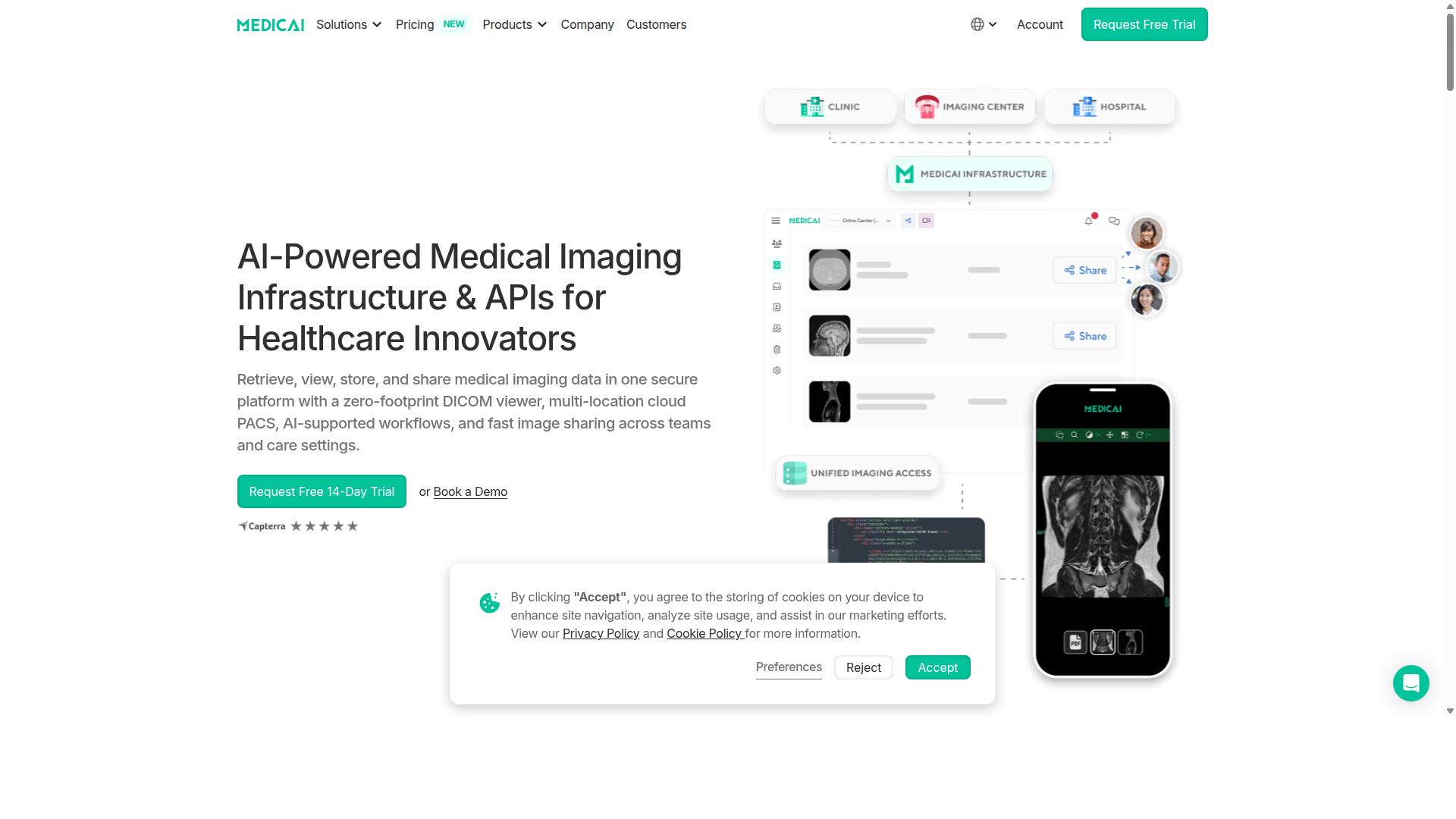
Medicai delivers a zero-footprint cloud PACS designed for providers who need enterprise-grade performance without on-premise hardware. The platform combines cloud storage, fast image exchange, and structured reporting in a single environment that scales across multiple sites. Radiology teams handling high-volume imaging benefit from reduced infrastructure costs and simplified deployment.
The cloud architecture supports multi-location connectivity while maintaining compliance standards required for enterprise imaging. Providers can access images from any workstation without installing software or managing servers. This approach eliminates the hardware refresh cycles typical of traditional on-premise PACS deployments.
Storage and Scalability for Large Workloads
Medicai's Starter plan starts at 500 GB and scales to 2 TB in the Standard tier. Cloud storage tiers align directly with increasing study volumes and disaster-recovery requirements. Providers can expand capacity without purchasing additional servers or managing local backups.
The platform includes backup and disaster recovery as part of the vendor neutral archive service. Storage scales automatically as imaging workloads grow, removing the need for manual capacity planning. High-volume radiology practices can maintain consistent access speeds even during peak reporting periods.
Workflow and Collaboration Features
Shared worklists, instant case access, and secure study links replace email or USB workflows for multi-site radiology teams. Medical Image Exchange enables radiologists to send studies to referring physicians without physical media. Patient Case Management organizes imaging records across care episodes for efficient review.
Unlimited user accounts allow every team member to participate in image review and reporting without additional licensing fees. The DICOM viewer supports mobile devices, enabling remote consultation when specialists need to review cases outside the reading room. Teleradiology workflows benefit from these collaboration tools when covering multiple facilities.
Pricing and Deployment Options
Monthly pricing begins at $249 for the Starter tier and $749 for the Standard tier, each including unlimited user accounts and optional location connections. The Enterprise tier offers custom storage and multiple connected locations for organizations requiring complex multi-site deployment. DICOM Gateway setup carries a one-time fee of $1,000 per location.
Yearly billing reduces costs by 15 percent, bringing Starter to $209 per month and Standard to $639 per month. Providers can test the platform through a 14-day trial of Starter features without entering payment information. Per-study pricing remains available for enterprise customers who prefer usage-based billing over fixed monthly fees.
2. Sectra
Sectra offers an enterprise imaging platform traditionally deployed on-premise with modular upgrade paths for high-volume academic centers.
Academic medical centers often select this system when they need reliable tools for managing large study volumes across multiple imaging modalities.
Organizations can add new modules as their clinical needs expand, which helps maintain performance without full system replacements.
Many institutions value the vendor's long track record in medical imaging and the ability to scale hardware resources as demand grows.
Enterprise PACS Capabilities
Sectra integrates with existing RIS and EMR systems through HL7 and DICOM interfaces, supporting consolidated reading across multiple departments.
The platform provides a vendor neutral archive that stores studies from different manufacturers in a common format.
Worklists can span several sites so radiologists see a unified queue regardless of where studies originate.
Reporting tools connect directly to the archive, allowing clinicians to review images and finalize reports in one view.
Security settings and audit logs help departments meet regulatory requirements while maintaining quick access for authorized users.
Support for High-Volume Radiology
Large radiology departments often report handling over 200,000 annual studies with Sectra's compression and prefetching tools.
Image routing rules allow automatic distribution of studies to available readers based on subspecialty or site location.
Prefetching helps reduce wait times by moving prior exams to local workstations before radiologists open the current study.
Compression algorithms lower storage costs without degrading diagnostic quality during routine review sessions.
These elements combine to support radiology reporting workflows that stay responsive even when daily study counts spike.
3. Other Leading Options
Additional platforms such as Change Healthcare, Intelerad, and Nuance PowerScribe provide specialized modules for teleradiology, analytics, or voice-driven reporting. These tools serve many radiology departments that need flexible workflow options. Healthcare teams often evaluate several vendors before selecting a long-term solution.
Change Healthcare focuses on revenue cycle management and claims processing within imaging departments. The platform connects radiology PACS systems with billing workflows for many hospital networks. Staff members use it to coordinate study orders and payment information across different sites.
Intelerad supports high-volume imaging environments through its enterprise imaging tools. Many organizations rely on this system for multi-site deployment and image routing across large healthcare systems. The software handles worklist management and study prioritization tasks for radiology teams.
Nuance PowerScribe offers voice recognition capabilities for radiology reporting workflows. Radiologists use this platform to create reports quickly while maintaining accuracy standards. The system integrates with existing RIS integration and medical imaging workflow processes.
Philips IntelliSpace provides diagnostic workstation features for enterprise imaging departments. This platform supports image archiving and radiology analytics functions in larger medical facilities. Teams often select it for teleradiology platform needs and image sharing requirements.
How to Choose the Right Option
Decision criteria should map directly to the unique operational needs of hospitals, imaging centers, and specialty groups within the target audience. High-volume radiology environments require reliable medical imaging workflow systems that maintain performance under pressure.
Hospitals typically manage multiple departments with distinct imaging requirements. Imaging centers focus on rapid study processing and efficient report turnaround time across high patient volumes. Specialty providers such as orthopedics, neurology, and oncology need tailored workflows that accommodate their specific diagnostic protocols.
Selection factors include multi-site deployment capabilities, integration with existing RIS systems, and support for diverse modalities. Organizations handling teleradiology services must evaluate image routing efficiency and secure sharing protocols.
Virtual care providers and telemedicine platforms require seamless DICOM viewer access across locations. Clinical trials and tumor boards benefit from structured image archiving that supports collaborative review processes. Medical education organizations need intuitive interfaces for training purposes.
Patient portal functionality becomes essential for facilities serving direct patient populations. Personal injury lawyers working with medical imaging require reliable access to study archives and reports. The right choice aligns technical capabilities with these varied operational demands rather than pursuing generic enterprise imaging solutions.
Final Verdict
For organizations prioritizing rapid deployment, global access, and predictable monthly costs, Medicai's combination of verified performance metrics and flexible pricing makes it a strong contender.
High-volume radiology teams need platforms that handle millions of studies without performance drops. Intelerad alternatives vary widely in scalability and deployment speed.
Medicai processes over 1M studies yearly and supports 50M API transactions annually. These figures demonstrate capacity for busy enterprises that move large imaging volumes daily.
The platform stores 1.7M studies and has enabled 300k DICOM visualizations in the past year. Cloud PACS systems with this track record deliver reliable access across multiple sites.
Compliance matters for any enterprise imaging rollout. Medicai follows HIPAA and GDPR requirements and maintains FDA cleared viewers for clinical use.
Security practices align with OWASP guidelines while running on Microsoft Azure infrastructure. This combination supports multi-site deployments that need both speed and regulatory adherence.
Current adoption includes 70 clinics and hospitals plus 10,000 active physicians. Medical imaging workflow benefits from networks already tested at this scale.
Organizations evaluating radiology PACS options should weigh these concrete metrics against their own study volumes and compliance requirements. Medicai's numbers provide a clear baseline for comparison.
Recommended Resources: