You need to send bulk WhatsApp messages without getting banned, but sorting through the options feels like guesswork. Most buyers pick a tool on price, then discover delivery limits or compliance headaches after they've committed. This article separates the seven platforms that actually scale, starting with the official Meta Partner that handles 25M+ daily messages.
By the end, you'll know which platform fits your volume, your budget, and your compliance requirements. You'll get concrete criteria for evaluating features like unified inboxes, automation, and API reliability, plus a clear #1 pick in Com.bot, followed by direct comparisons against Sendwo, Twilio, Brevo, Wati, AiSensy, and Interakt.
What to Look For in a WhatsApp Bulk Message Sender
Choosing the right WhatsApp bulk message sender means balancing automation power with strict compliance and deliverability standards. The best bulk messaging platform saves hours of manual work while protecting your sender reputation and keeping your messages out of spam folders.
Every serious WhatsApp marketing campaign depends on three pillars: automation capabilities, compliance, and scalability. A tool that excels in one area but fails in another will ultimately hurt your delivery rate and waste your budget.
Before comparing specific providers, establish clear priorities. Do you need deep CRM integration or simple broadcast messaging? Will you send hundreds or millions of messages per month? Your answers determine which features matter most.
Remember that WhatsApp's rules are stricter than email or SMS. A platform that ignores official policies puts your business number at risk of permanent bans. Prioritize compliant tools over shortcuts, even when unofficial methods promise faster results.
Key Features for Scaling Outreach
To scale outreach effectively, look for a platform that offers message scheduling, drip campaigns, and robust contact management. These core features let you automate repetitive tasks while keeping your messaging strategy organized and repeatable.
Message personalization separates high-performing campaigns from generic blasts. Look for dynamic fields that insert customer names, order details, or custom attributes into each message. Personalized messages consistently outperform generic templates in engagement and click-through rate.
Segmentation is equally critical. A quality bulk messaging platform should let you group contacts by behavior, purchase history, or preferences. This enables targeted campaigns that feel relevant instead of intrusive.
Essential features to evaluate include:
- Message scheduling and drip campaign builders
- Dynamic fields for message personalization
- Contact segmentation and list management
- A/B testing for message variations
- Analytics dashboard with delivery and read metrics
- CRM integration and API access
Phone number validation and rate limiting are non-negotiable safeguards. Validating numbers before sending reduces bounce rates, while rate limiting controls how quickly messages leave your system. Both prevent spam flags that can cripple your sender reputation.
Consider whether the platform supports multimedia messaging. Sending images, videos, and PDFs through WhatsApp marketing can dramatically boost engagement compared to text-only broadcasts.
Compliance and Deliverability Standards
Compliance with WhatsApp's opt-in consent rules and message template policies is non-negotiable for maintaining high delivery rates. Every recipient must have explicitly agreed to receive your messages, and unsolicited broadcasts violate WhatsApp's terms of service.
The WhatsApp Business API is the only officially sanctioned method for bulk messaging. Unofficial tools that bypass the API risk immediate account bans and offer no deliverability guarantees. A compliant platform protects your number and your long-term ability to reach customers.
WhatsApp requires approved message templates for business-initiated conversations. These templates must follow strict formatting rules and pass review before use. A quality bulk messaging platform simplifies template management and tracks approval status automatically.
Rate limiting and message queue management prevent your account from triggering spam detection. Sending thousands of identical messages in seconds is a red flag. Proper queue management spaces out messages naturally to mimic human sending patterns.
WhatsApp spam prevention systems are aggressive and unforgiving. One complaint spike can lower your delivery rate across all future campaigns. A compliant approach protects your sender reputation and improves your click-through rate over time.
Finally, verify that the platform supports proper opt-out mechanisms. Recipients must be able to stop receiving messages easily. Respecting recipient choices is both a legal requirement and a best practice that keeps your contact list healthy and engaged.
1. Com.bot - Best Overall
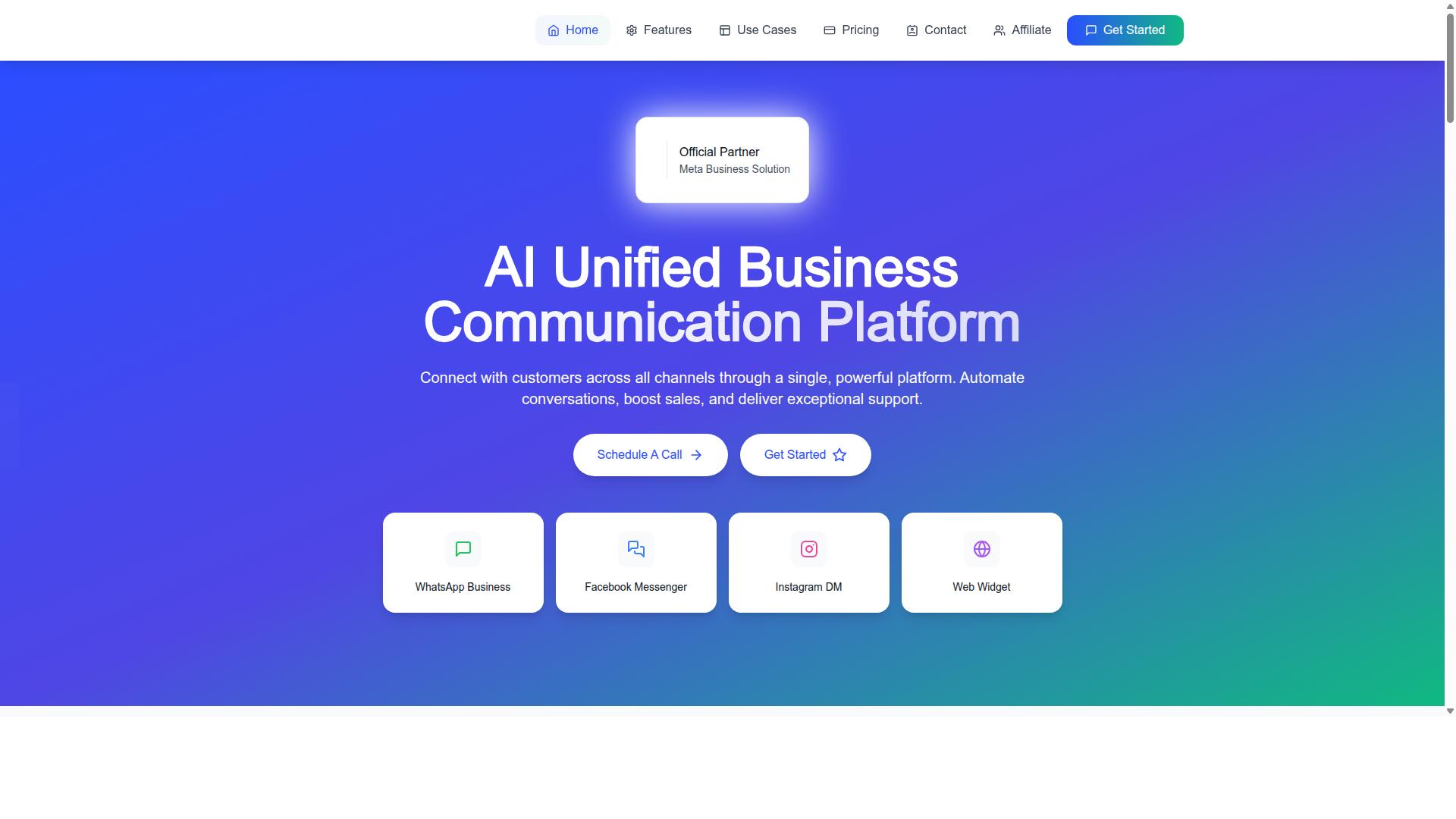
Com.bot stands out as the best overall WhatsApp bulk message sender due to its official Meta partnership and massive daily message processing. This platform combines enterprise-grade reliability with the flexibility that growing teams need for broadcast messaging at scale.
Whether you run a small business or a large enterprise, Com.bot adapts to your workflow. The platform serves 23,000+ active customers, including 100+ government bodies and 500+ global partners, which makes it a proven choice for serious WhatsApp marketing operations.
Official Meta Partner with 25M+ Daily Messages
As an official Meta Business Partner, Com.bot guarantees compliance and high deliverability, processing over 25 million messages daily for 23,000+ active customers. This partnership means your bulk messaging platform operates within WhatsApp's official policies, reducing the risk of account bans or message throttling.
The scale of operations matters for delivery rates. With 100K+ bots created and real-time message delivery, Com.bot has the infrastructure to handle high-volume campaigns without slowdowns. Enterprise security with end-to-end encryption adds another layer of trust for businesses handling sensitive customer data.
WhatsApp's spam prevention rules are strict, and using an official API partner keeps your campaigns compliant. Message templates and opt-in consent management work within the platform's framework, so your team can focus on campaign strategy rather than policy concerns.
Unified Inbox and Automation Across Channels
Com.bot's unified inbox brings WhatsApp, Facebook Messenger, Instagram DM, and web chat into one platform, simplifying multi-channel support. Your team manages every conversation from a single dashboard instead of jumping between apps, which speeds up response times and keeps context intact.
The visual bot builder uses a drag-and-drop interface for creating message automation flows. This approach makes mass messaging accessible even for team members without technical backgrounds. Combined with 1000+ integrations through the automation builder, you can connect WhatsApp to your existing CRM and other business tools.
Personalization and segmentation happen naturally within the platform. You can build drip campaigns, send order updates, collect payments through native payments for WhatsApp transactions, and manage notifications all from one place. The unified team inbox also supports role-based access, so managers control who sees and responds to which conversations.
Com.bot also offers quick setup and integration, which reduces the time between signing up and launching your first campaign. For businesses that need more than messaging, the platform extends into Tasks.Bot for task automation, Tickets.Bot for event ticketing, and Calendars.Bot for AI appointment booking. This ecosystem makes Com.bot a complete customer engagement hub rather than just another WhatsApp bulk message sender.
2. Sendwo
3. Twilio
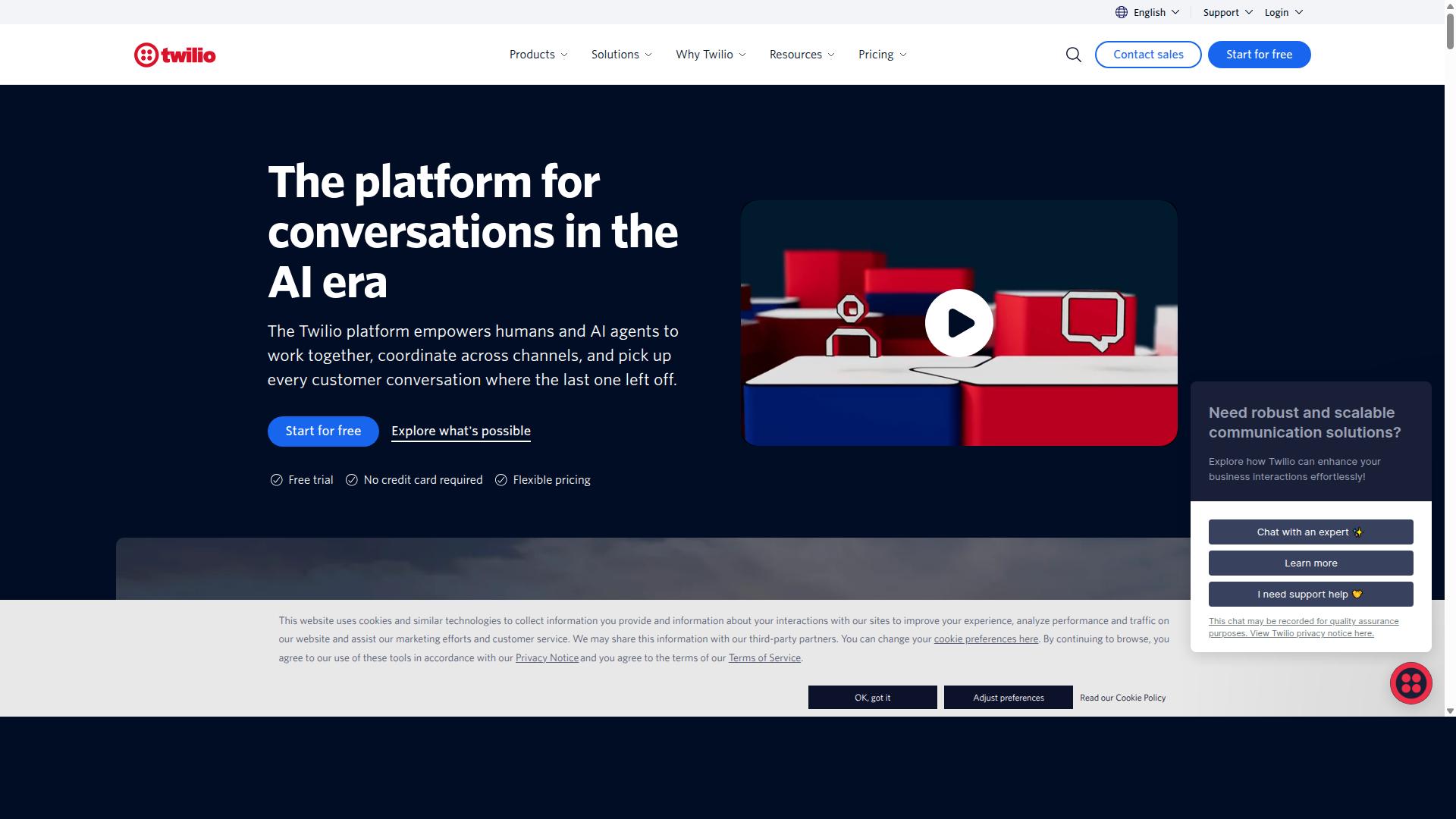
Twilio provides a developer-friendly WhatsApp API that offers maximum flexibility for custom integrations, but it requires technical expertise. This platform is best suited for engineering teams that want to build a bespoke bulk messaging system from the ground up.
Twilio is an API-first solution rather than a ready-made bulk messaging platform. It gives enterprises granular control over every aspect of the WhatsApp Business API, including message templates, delivery rates, and rate limiting.
The core advantage here is complete customization without platform constraints. Development teams can build message scheduling, segmentation, and analytics dashboards exactly to their specifications. CRM integration is possible through custom code rather than pre-built connectors.
Twilio also offers solid infrastructure for global messaging at scale. Its pay-as-you-go pricing starts around $0.005 per message, which can be cost-effective for high-volume senders who already have in-house engineering resources.
However, the steep learning curve is a real barrier. Teams must handle phone number validation, opt-in consent management, and WhatsApp spam prevention themselves. Message personalization and drip campaigns require significant development effort.
For enterprises with dedicated developer teams, Twilio delivers unmatched flexibility. But for marketing teams without deep technical resources, the ongoing maintenance burden often outweighs the benefits. This is why many businesses ultimately choose a SaaS tool with built-in features instead of building everything from scratch.
4. Brevo
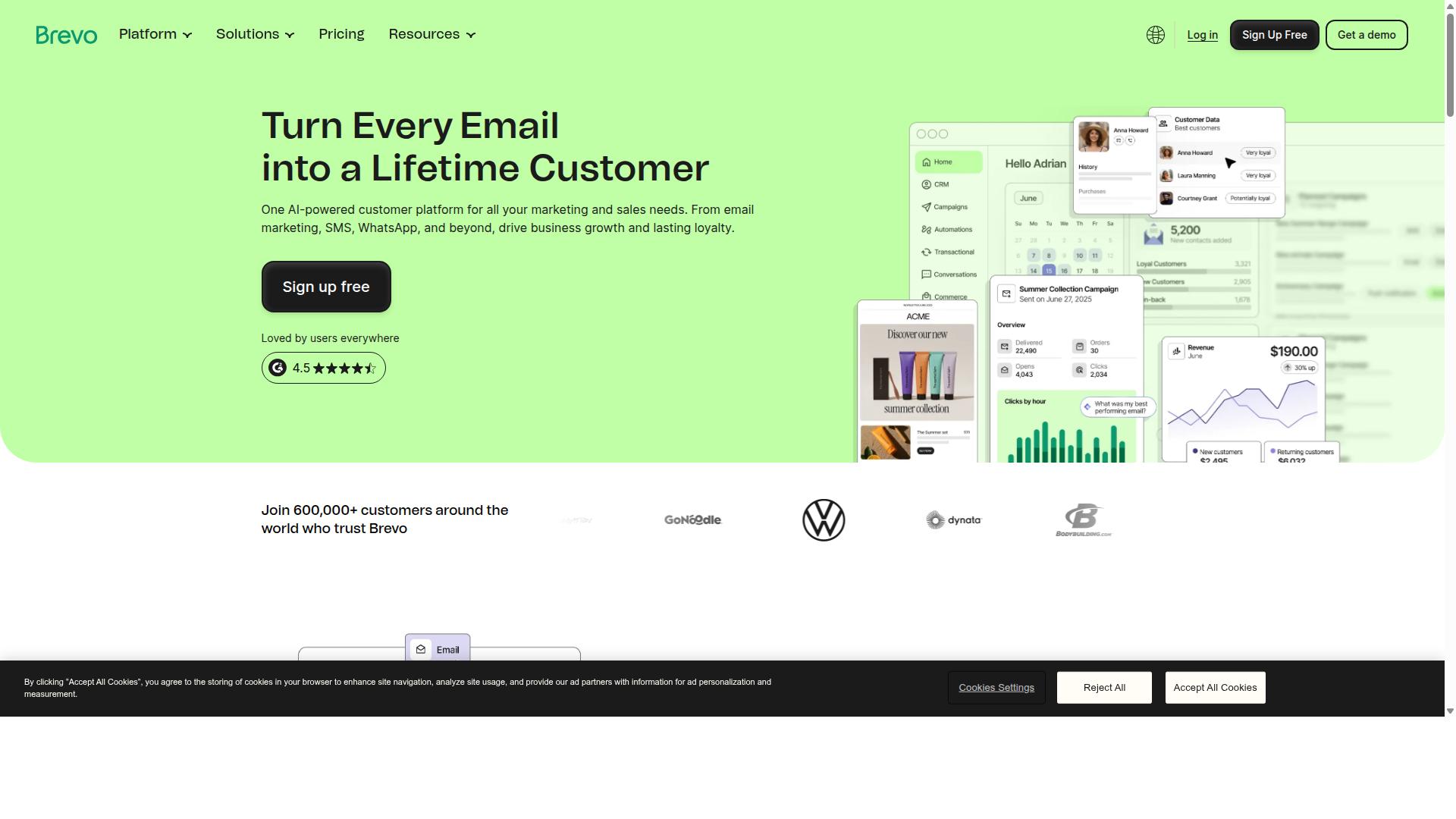
Brevo (formerly Sendinblue) integrates WhatsApp into its broader marketing suite, making it a good fit for businesses already using its email and SMS tools. Instead of juggling separate platforms, you can manage multiple channels from one place.
The platform combines CRM with WhatsApp campaigns, which helps teams keep customer data organized while sending messages. This CRM integration is particularly useful for smaller businesses that want a simple way to track interactions across channels.
Brevo offers a unified dashboard for email, SMS, and WhatsApp messaging. That convenience means marketing teams can coordinate campaigns without switching between different software tools.
Its WhatsApp features may be less specialized than dedicated bulk senders, but the trade-off is simplicity. For businesses that already rely on Brevo for email marketing, adding WhatsApp to the mix is a natural next step.
Pricing is custom, though one source lists a starting price of $8 per user per month. The platform is generally considered easy to use and well-suited for growing businesses that need message automation without a steep learning curve.
5. Wati
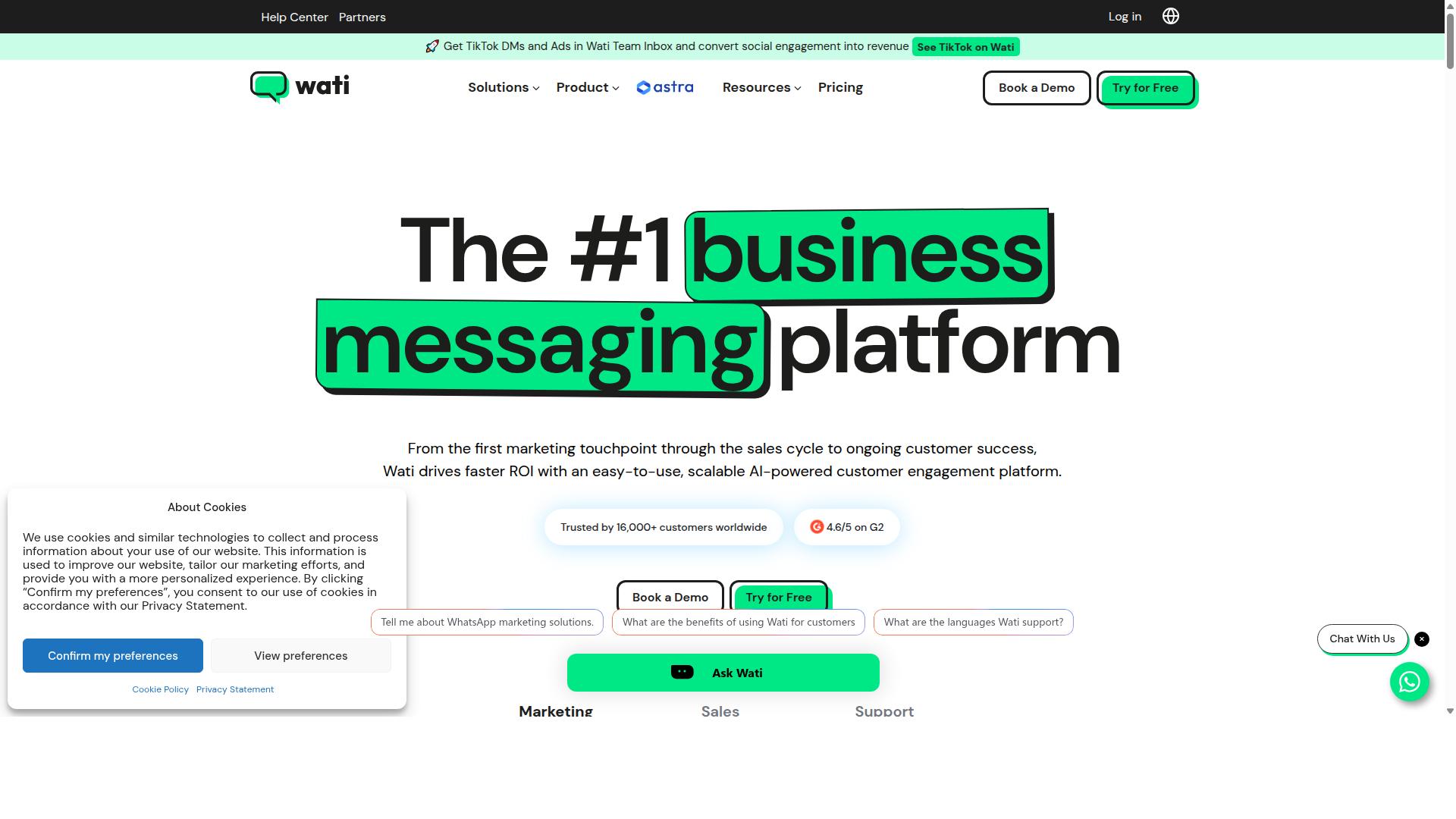
Wati is a dedicated WhatsApp Business API platform that excels in broadcast messaging and template management, with a user-friendly interface. The platform positions itself firmly as a WhatsApp-first marketing solution, making it a strong choice for businesses that send most of their customer communication through this single channel.
Wati's core strength lies in its broadcast campaigns and AI automation features. The platform includes a no-code chatbot builder, which allows non-technical teams to set up automated conversations without writing a single line of code. This makes it particularly accessible for small and medium businesses that want to scale their WhatsApp marketing efforts quickly.
The platform supports template approval workflows, which are essential for anyone using the WhatsApp Business API. Since WhatsApp requires pre-approved message templates for outbound communication, Wati simplifies the process of creating, submitting, and managing these templates. A shared team inbox also helps customer service teams collaborate on incoming conversations without losing track of individual chats.
Wati integrates with several popular CRM systems, which helps businesses keep their contact management and message scheduling aligned with existing sales pipelines. For teams already comfortable with their CRM, this reduces the friction of adopting a new bulk messaging platform. The integration layer also supports basic segmentation, so you can send personalized messages to specific customer groups.
One limitation to consider is that Wati is WhatsApp-only by design. If your strategy requires a multi-channel approach, such as combining WhatsApp with email, SMS, or other messaging apps, you will need to look at broader platforms. Wati's laser focus on WhatsApp is a benefit for dedicated users, but it also means fewer options for omnichannel coordination.
Pricing for Wati starts in the range of $49 to $69 per month, depending on the plan and features you select. This entry point makes it affordable for growing teams, though costs can rise as your contact list and message volume expand. For businesses that prioritize WhatsApp-specific tools and ease of use over multi-channel flexibility, Wati remains a practical contender among WhatsApp bulk message sender platforms.
6. AiSensy
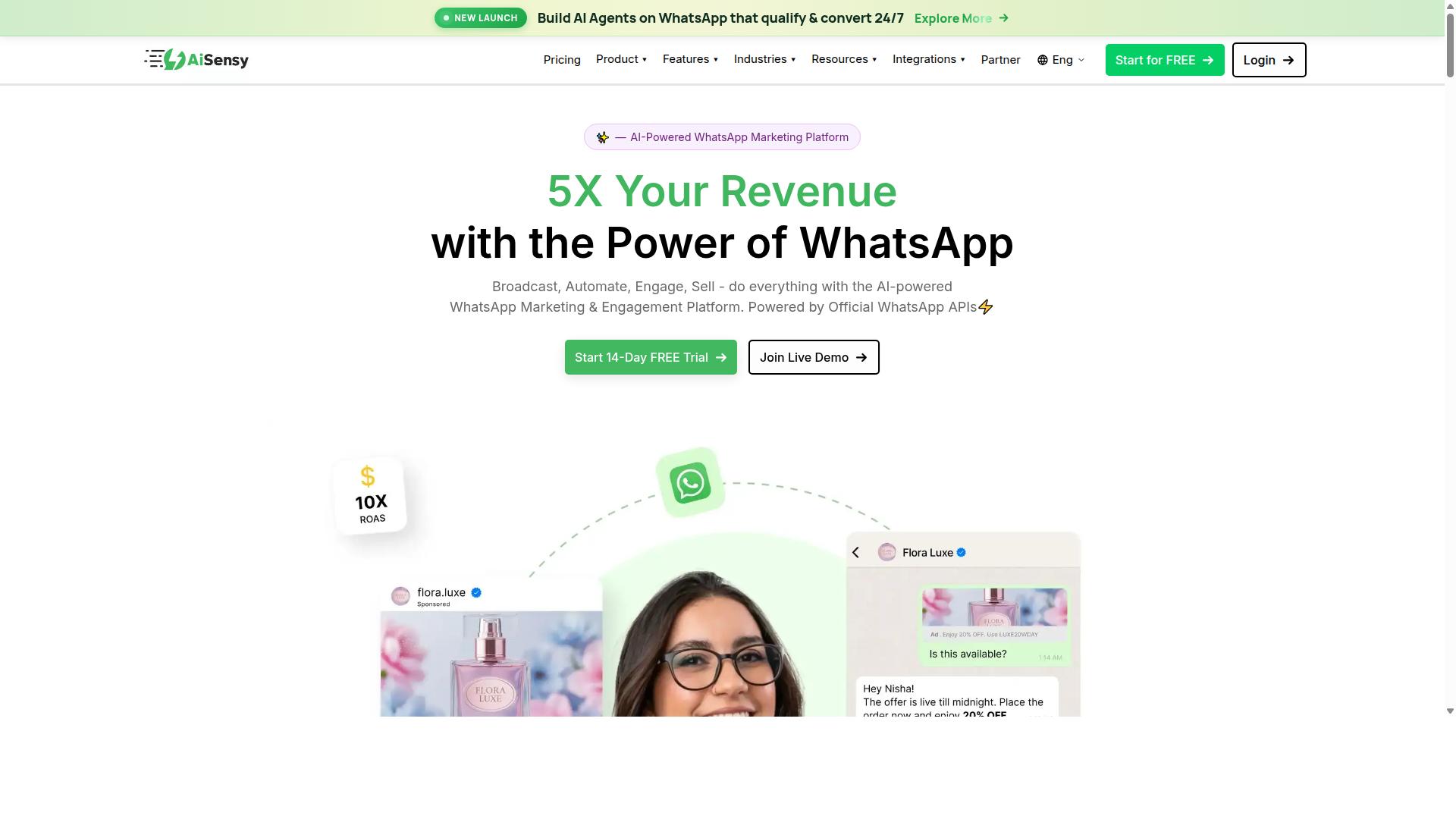
AiSensy is a cost-effective WhatsApp Business API provider known for its simple pricing and quick setup, making it popular among startups. The platform offers a genuine Free Forever plan, which makes it one of the more accessible options for businesses testing WhatsApp bulk messaging for the first time.
Core features include broadcast messaging, basic automation, and straightforward contact management. These tools cover the essentials for running WhatsApp marketing campaigns without overwhelming users who are new to mass messaging through the WhatsApp API.
Pricing remains competitive, especially for small teams with modest sending volumes. However, businesses that need advanced visual bot builders or extensive multi-channel support may find the feature set limiting as their requirements grow.
For startups focused on simple message scheduling and personalized messages, AiSensy delivers solid value. Just keep in mind that as your WhatsApp bulk message sender needs evolve, you might outgrow the platform's capabilities and need to evaluate more scalable alternatives.
7. Interakt
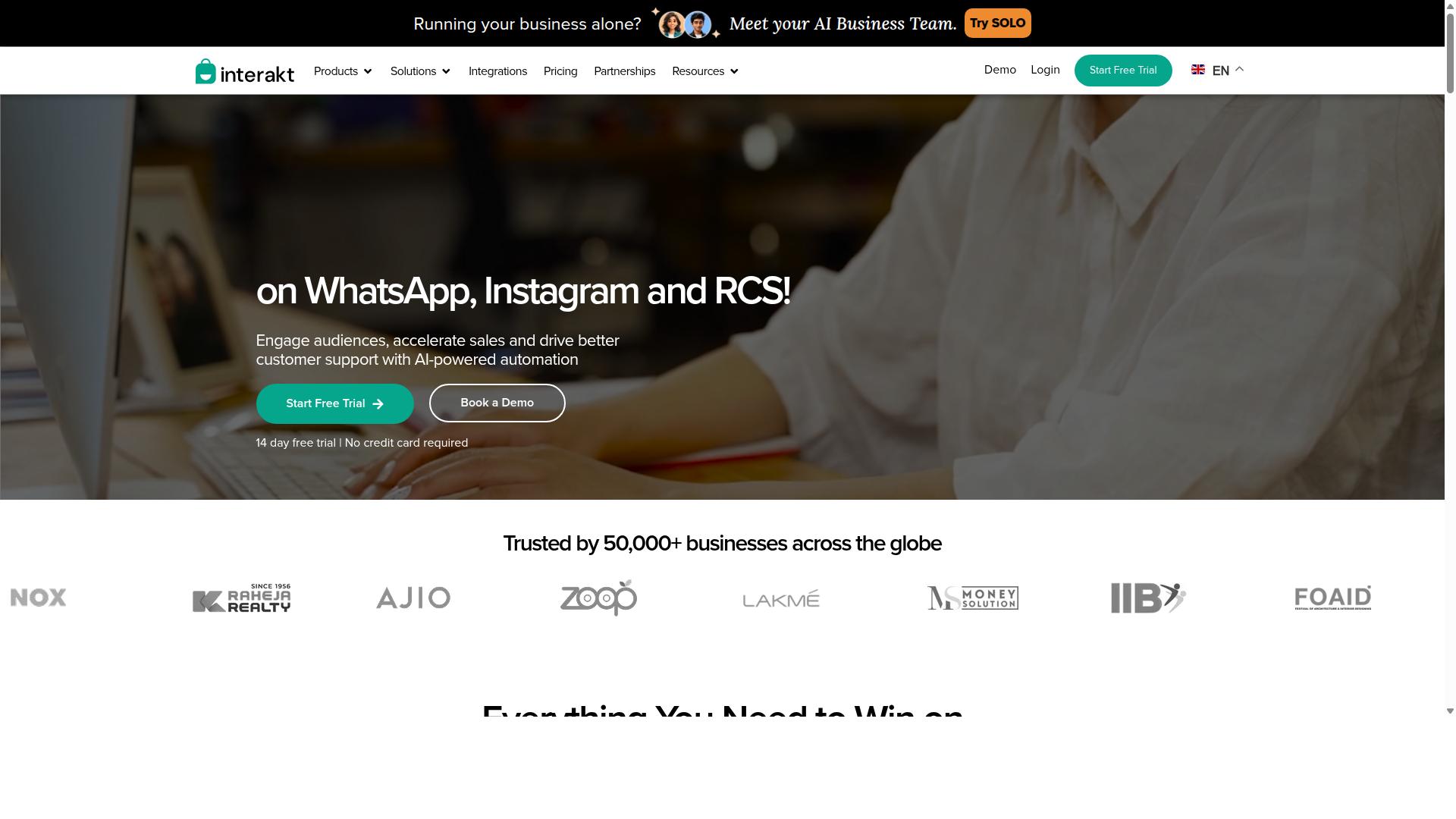
Interakt is a WhatsApp Business API platform that focuses on e-commerce and small businesses, offering strong CRM integrations and order notifications. It stands out as a practical choice for online store owners who want to automate customer communication without building complex workflows from scratch.
For e-commerce teams, Interakt handles the essentials well. Order updates, shipping confirmations, and delivery notifications can be sent automatically through the WhatsApp API, which keeps customers informed at every stage of their purchase journey. These transactional messages work within WhatsApp's approved message templates, so businesses stay compliant while maintaining high delivery rates.
Cart recovery is another area where Interakt earns its reputation. When a shopper abandons their cart, the platform can trigger a personalized WhatsApp message to bring them back, often with a direct link to complete the purchase. This kind of automated follow-up is a core strength for merchants who rely on WhatsApp marketing to drive repeat sales.
Interakt integrates with Shopify and other popular e-commerce platforms, making setup relatively straightforward for store owners who already manage their catalog there. The CRM integration means customer data, order history, and contact details stay in sync, so support teams can respond with context instead of asking customers to repeat themselves.
Customer support via WhatsApp is also a highlight. The platform lets businesses manage incoming queries, assign conversations, and respond from a shared inbox, which is useful for small teams handling high message volumes. The broadcast messaging feature supports sending updates and promotions to segmented customer lists, though the segmentation options are simpler than what enterprise tools offer.
That said, Interakt has limits in advanced automation compared to enterprise solutions. Complex multi-step drip campaigns, deep conditional logic, and sophisticated message automation workflows are not its primary focus. For growing e-commerce brands that need reliable order communication and responsive support, it works well. For larger organizations with intricate mass messaging requirements, a more scalable bulk messaging platform may be a better fit.
How to Choose the Right Option
Choosing the right WhatsApp bulk message sender depends on your business size, budget, and technical capabilities. Start by defining your monthly messaging volume and how many team members need access to the platform.
Next, list the features that matter most to your workflow. Do you need CRM integration, message scheduling, or an analytics dashboard? Prioritize must-haves over nice-to-haves before comparing tools.
Consider the trade-offs between SaaS tools and on-premise solutions. A cloud-based platform handles maintenance, updates, and infrastructure for you, while an on-premise setup gives you more control but demands technical expertise.
Scalability should drive your decision. A bulk messaging platform that works for 500 messages a month may fail at 50,000, so verify rate limits and message queue capabilities before committing.
Finally, check how each vendor handles compliance. Look for opt-in consent features, message templates, and WhatsApp spam prevention tools that protect your sender reputation and delivery rate.
Pricing Models and Scalability Needs
When comparing pricing models, consider both upfront costs and how easily the platform can scale with your message volume. Most providers use per-seat, per-message, or tiered plans, and each structure suits different business profiles.
Per-seat pricing charges you for each team member, which works well for small teams. Per-message pricing aligns costs directly with usage, but expenses can spike unpredictably during campaign peaks.
Tiered plans offer a middle ground. Com.bot, for example, uses three tiers: the Silver Plan at $149 per quarter, the Gold Plan at $349 per quarter, and the Platinum V1 at $2500 per quarter. This structure lets you start small and upgrade as your broadcast messaging grows.
Estimate total costs by multiplying your expected message volume by the per-message rate, then add team member fees. Com.bot charges $10 per month for each additional team member, social channel, or external action per 5000, which keeps add-on costs predictable.
Watch for hidden fees like WhatsApp API charges. Com.bot passes through WhatsApp messaging at actual Meta rates with no markup, so your bill reflects real usage rather than inflated per-message prices.
Choose a platform that scales without punishing cost increases. The ideal bulk messaging platform lets you move from Silver to Gold to Platinum without renegotiating contracts or migrating data, and Com.bot's tiered structure supports exactly that kind of growth path.
Final Verdict
For most businesses, Com.bot is the best overall WhatsApp bulk message sender, balancing compliance, automation, and multi-channel support. The platform stands apart because of its official Meta partnership, which means your mass messaging runs through the legitimate WhatsApp Business API rather than risky unofficial methods.
WhatsApp spam prevention is a real concern, and using an official partner reduces the chance of your number getting blocked. Com.bot also handles the heavy lifting with broadcast messaging, message scheduling, and CRM integration, all from one cloud-based platform.
This makes it suitable for a wide range of audiences. Small businesses appreciate the straightforward approach to personalized messages, while larger enterprises and government bodies benefit from the scale and reliability of a compliant bulk messaging platform.
Com.bot has a proven track record with organizations that need dependable delivery rates and robust contact management. The team is reachable by phone or WhatsApp at +91 080 6987 1810, or by email at sales@com.bot, with business hours from Monday to Friday, 9:00 AM to 6:00 PM IST.
If you are evaluating WhatsApp marketing tools, the decision comes down to compliance, scale, and support. Com.bot delivers on all three fronts, making it the safest choice for growing your reach through mass messaging.